Article: Ceramides vs. Hyaluronic Acid: Key Differences Explained
Ceramides vs. Hyaluronic Acid: Key Differences Explained
“Ceramides versus hyaluronic acid” is one of those skincare comparisons that shows up everywhere, and for good reason. They both live in the conversation of hydration, both appear in products marketed for dry or stressed skin, and both are frequently recommended by dermatologists. But the overlap is more superficial than functional, and assuming they do the same thing is usually where routines start to plateau.
The simplest way to think about it is this: hyaluronic acid brings water into the skin, while ceramides help keep it there. One influences hydration levels in the moment, while the other determines how well the skin can hold onto that hydration over time. Once you understand that distinction, it becomes much easier to see why some routines feel instantly refreshing but never quite "last", while others gradually rebuild skin that feels more resilient, even without dramatic changes in texture overnight.
For readers building a foundation in barrier health, NEOVA’s explanation of What are Ceramides? is a useful starting point before comparing actives like these.

What Ceramides Do: The Skin’s Built-In Defense System
Ceramides are lipids naturally found in the outermost layer of skin, where they act as part of the structural matrix that holds skin cells together. In practice, they help keep the skin barrier intact.
When ceramide levels are healthy, skin behaves predictably: it retains moisture more efficiently, feels comfortable after cleansing, and is less reactive to environmental changes or active ingredients.
But when those levels decline, which can happen gradually with age or more abruptly with over-exfoliation, harsh cleansing, or environmental stress, the barrier becomes more permeable and less stable. That shift is often felt before it is seen, as skin that suddenly feels tight after washing, reacts to products that used to be well tolerated, or never quite feels fully hydrated no matter what is applied on top.
In skincare, ceramides and ceramide blends act as structural repair mechanisms that help restore the skin's ability to retain moisture in the first place.

What Hyaluronic Acid Does: Instant Hydration, Surface-Level Plumping
Hyaluronic acid is a well-known humectant, and its reputation comes from a very real mechanism: it binds water and draws it into the upper layers of the skin. The result is often immediate: skin looks more hydrated, feels smoother, and fine dehydration lines appear softened within minutes of application.
This is why hyaluronic acid has become such a staple in both clinical and everyday skincare routines. It delivers a visible change quickly, especially in skin that is temporarily dehydrated due to travel, climate shifts, or simply being exposed to dry indoor environments.
But what often gets lost in that instant gratification is the fact that hyaluronic acid does not “lock” hydration in place. It attracts water, but it does not determine how well the skin retains it. That distinction matters most when the barrier is compromised, because in those cases the water it draws in can escape just as quickly as it arrives, leaving skin in a cycle of temporary improvement followed by rapid reversion.
This is also why hyaluronic acid skincare, like NEOVA Advanced HA, tends to perform best when paired with barrier-supporting ingredients rather than used in isolation.

Ceramides vs. Hyaluronic Acid
Comparing ceramides and hyaluronic acid is less about choosing a “better” ingredient and more about understanding two different layers of skin function. Hyaluronic acid operates primarily at the level of hydration availability in the upper epidermis, while ceramides operate at the level of barrier integrity, where they determine how effectively that hydration is retained.
In other words, hyaluronic acid influences what enters the skin, while ceramides influence what stays in it. This is why the experience of each ingredient can feel so different. Hyaluronic acid tends to produce immediate visual changes, especially in dull or dehydrated skin, while ceramides contribute to a slower but more foundational shift in how skin behaves over time, resulting in less reactivity, more consistency, and a greater ability to tolerate both environmental stress and active ingredients.

Why They Work Better Together Than Alone
When used together in a skincare regimen, hyaluronic acid and ceramides create a more complete hydration system. Hyaluronic acid, say in a serum or mask format, increases the amount of water available within the upper layers of the skin, while ceramides help reduce the rate at which that water is lost through the barrier. The result is not just better hydration, but more sustained hydration, which is ultimately what most people are trying to achieve even if they initially describe it as “dry skin.”
The order of application matters here in a subtle but meaningful way. Hyaluronic acid is most effective when applied to slightly damp skin, where it can bind to existing water on the surface, while ceramide-based moisturizers work best as a final step that helps seal the hydration that has already been introduced. When layered correctly, each ingredient supports a different stage of the same process rather than competing for function.
This layered logic is also reflected across NEOVA moisturizers and serums, which are built around barrier support paired with hydration retention strategies rather than single-mechanism hydration alone.

When Each Ingredient Matters Most
Ceramides become especially important when skin is not just dry, but structurally compromised. This is often the case when skin feels reactive to multiple products at once, becomes easily irritated by environmental changes, or never seems to fully recover its comfort level after cleansing or exfoliation. In these situations, the barrier itself is the limiting factor, not the amount of water being introduced to the skin.
Hyaluronic acid, on the other hand, is most noticeable when skin is dehydrated but otherwise stable. This is the type of skin that may look dull or feel tight without showing visible flaking or irritation, and it often responds quickly to humectant-driven hydration, particularly when used consistently on damp skin.
Most people, however, sit somewhere in between these two states, which is why routines that combine both approaches tend to feel more stable and predictable over time than those that rely on either mechanism alone.

How to Use Ceramides and Hyaluronic Acid in a Skincare Routine
The full-length guide on how to use ceramides in a skincare routine covers the complete layering protocol. For the purposes of this comparison, the core principle is application order based on product weight and function.
-
Step 1: Cleanse with a gentle, low-surfactant cleanser that does not strip the existing lipid layer.
-
Step 2: While skin is still damp, apply a hyaluronic acid serum or skin treatment. The presence of water on the skin surface gives it the source it needs to draw from immediately.
-
Step 3: Seal the routine with a ceramide-containing moisturizer or barrier cream. This layer slows TEWL and traps the moisture introduced in earlier steps.
-
Step 4 (morning): Apply SPF over the moisturizer. UV exposure is a primary driver of ceramide degradation and protecting the barrier prevents further lipid loss.
For personalized product guidance, the NEOVA Skin Quiz helps match formulations to your skin type and current condition.

Frequently Asked Questions: Ceramides vs Hyaluronic Acid
1. Which is better: ceramides or hyaluronic acid?
Neither is universally better. They address different problems and work through different mechanisms. Hyaluronic acid introduces hydration; ceramides retain it. The more useful question is which your skin needs most right now. Barrier-compromised skin benefits more immediately from ceramides. Dehydrated skin with an intact barrier may see faster surface improvement from hyaluronic acid. For most people, both are warranted.
2. Can I use ceramides and hyaluronic acid together?
Yes, and this is widely recommended in clinical skincare contexts. They are complementary ingredients that address sequential steps in the hydration process. Pairing them in a routine is one of the most efficient ways to address both barrier repair and moisture delivery simultaneously. NEOVA moisturizers are formulated with this kind of barrier and hydration synergy in mind.
3. Which should go first in a routine?
Hyaluronic acid first, applied to damp skin. Then ceramide-containing moisturizer on top to seal. This order respects both mechanisms: hyaluronic acid needs access to a water source to function as a humectant, and the ceramide layer works best as an occlusive finish over lighter serums rather than under them.

4. Can I use ceramides if I have oily skin?
Yes. Oily skin can still experience barrier disruption and ceramide deficiency, particularly if the routine involves frequent acid exfoliation, retinoids, or aggressive cleansing. The key is formulation: a lightweight ceramide lotion is appropriate for oily or combination skin and will not contribute to congestion or excess surface oil.
5. Does hyaluronic acid work without a moisturizer on top?
In humid environments, hyaluronic acid (HA) can function reasonably well without occlusion, drawing moisture from the ambient air. In dry climates or heated or air-conditioned indoor environments, the moisture supply from the air is insufficient and unoccluded HA may accelerate TEWL by drawing water from the dermis toward the surface where it then evaporates. Applying a ceramide-containing product over HA is particularly important in these conditions.

The Takeaway: Seal and Strengthen, Then Hydrate
The ceramides vs hyaluronic acid question does not have a winner because they are not competing. They operate at different levels of the skin, address different physiological problems, and produce different but complementary outcomes. Used together in the correct sequence, they form the most efficient hydration system available in topical skincare.
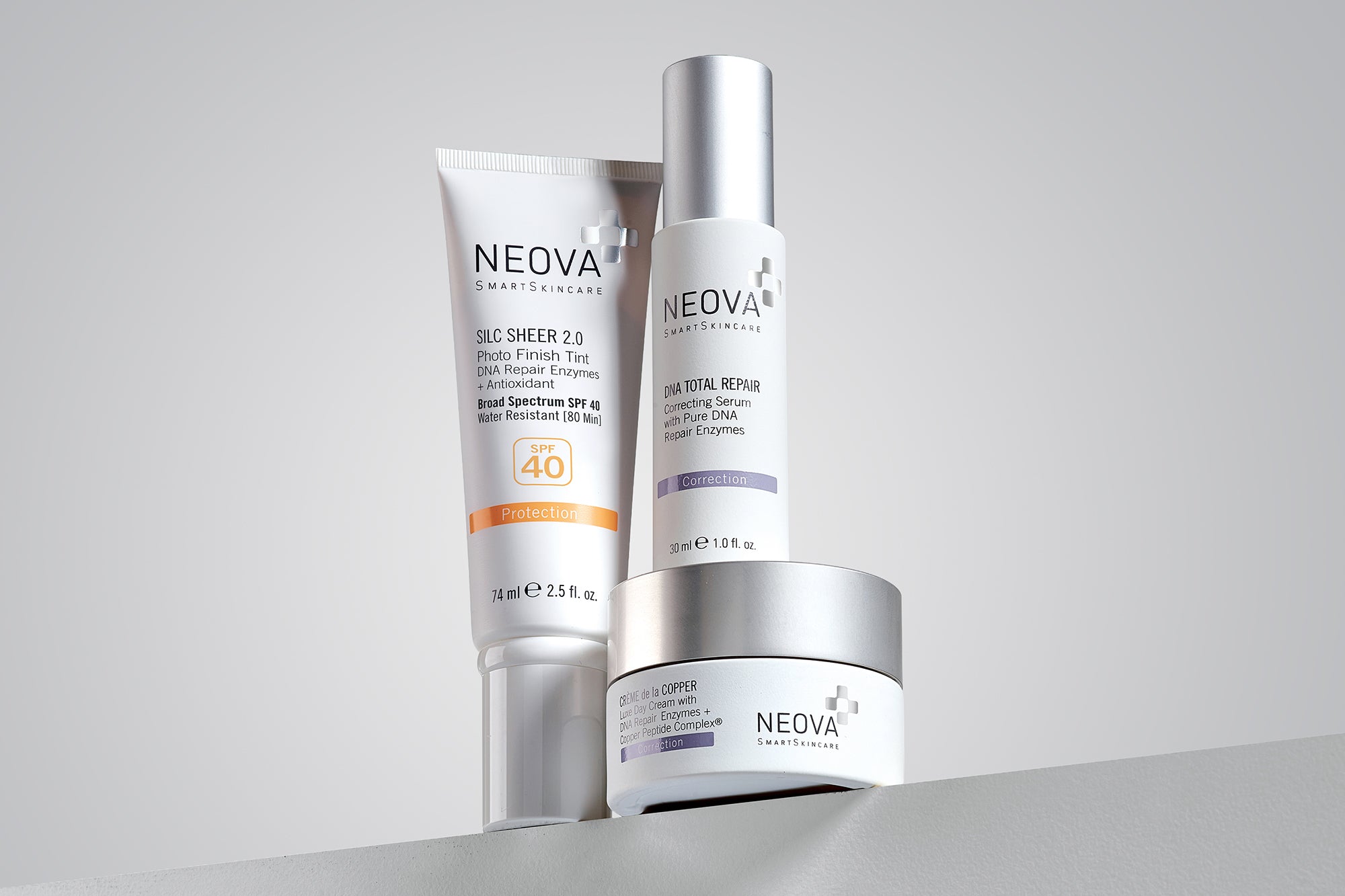
For anyone building a routine around NEOVA's advanced repair technology, ceramide and hyaluronic acid pairing creates a stable, well-hydrated barrier environment that allows our signature copper peptide and DNA repair enzymes to penetrate and perform.
Explore the NEOVA Ceramide Blend and Hyaluronic Acid skincare ranges to find formulas that incorporate these principles into every step.