The sunburn has healed. The tan has faded. Your skin looks back to normal by every visible measure. Naturally, it's tempting to assume the damage is behind you too.
But UV exposure doesn't stop affecting your skin the moment redness disappears. Beneath the surface, oxidative stress triggered by summer sun can continue degrading skin cells for weeks, sometimes longer. Antioxidants for skin aren't just a summer add-on because of this. They're a year-round clinical need, and that includes well into fall.
A solid post summer skincare routine should go beyond damage control at this point. Real summer skin recovery happens at the cellular level, and that takes active ingredients working over time.
What Actually Happens to Skin During UV Exposure
Ultraviolet (UV) radiation does two things to skin at once.
First, it damages DNA directly within skin cells.
Second, it generates free radicals, unstable molecules that steal electrons from healthy cells and set off a chain reaction of cellular injury.
That second mechanism is where things get complicated. UV damage to skin isn't limited to the burn you can see on the surface. It sets off a biochemical cascade, and that cascade keeps generating oxidative stress on skin long after sun exposure ends. Free radicals keep reacting with surrounding cells until something neutralizes them.
Visible tanning and redness usually fade within days. The oxidative process underneath doesn't follow the same timeline at all.
Why the Tan Fading Doesn't Mean the Damage Is Gone
Melanin production, or tanning, is your skin's defense response to UV-induced DNA injury. It signals that damage has already occurred rather than protection kicking in. Once that melanin fades, it's easy to assume the danger has passed along with it.
A few things are often still happening beneath the surface during this time:
-
Free radical activity continues. Reactive oxygen species generated during UV exposure can persist and keep reacting with lipids, proteins, and DNA in skin cells for an extended window afterward.
-
Collagen degradation accelerates. Oxidative stress activates enzymes called matrix metalloproteinases, which break down collagen and elastin. This is a major driver behind skin aging caused by sun exposure.
- DNA mutations accumulate quietly. Unrepaired UV-induced DNA damage is a documented contributor to premature aging and other long-term skin concerns.
Time alone doesn't undo this. Skin recovery after sun exposure calls for active ingredients that actually address what's happening below the surface.
The Role of Antioxidants in Post-Summer Skin
Antioxidants neutralize free radicals before they can damage healthy cells, interrupting the oxidative cascade that UV exposure sets in motion. That's what makes antioxidant skincare one of the more clinically supported approaches for helping to protect skin from free radicals, rather than just calming things on the surface.
So, what are the best antioxidants for skin? Dermatology research points to a handful of standouts: vitamin C, vitamin E, ferulic acid. Coupled with DNA repair enzymes, antioxidants provide support by helping defend against oxidative stress while supporting the skin’s natural response to UV-induced DNA damage.
NEOVA SmartSkincare builds its formulas around this research, targeting oxidative stress and DNA damage across every stage of recovery.
Building a Post-Summer Antioxidant Routine
An effective anti aging skincare routine for late summer and fall should address three things: neutralizing ongoing oxidative stress, reinforcing the skin barrier, and repairing existing DNA damage.
Step 1: Neutralize Free Radicals with Vitamin C
C 20+ delivers a 20% L-ascorbic acid concentration, one of the most bioavailable and well-studied forms of vitamin C serum, to help neutralize free radicals generated by UV exposure. As a vitamin C antioxidant serum, it also works to inhibit melanin overproduction, which makes it useful as a vitamin C serum for hyperpigmentation left behind by summer sun. If you've been searching for a vitamin C serum for sun damage or a stable 20% vitamin C serum, this is the formulation built for that.
Apply it in the morning to clean skin, before moisturizer and sunscreen, as part of your daily antioxidant defense.
Step 2: Reinforce the Barrier Against Ongoing Stress
Post-summer skin is often compromised. Barrier function tends to weaken under repeated oxidative and environmental stress, which leaves skin more reactive and slower to bounce back. Power Defense is formulated as a daily antioxidant moisturizer and skin barrier repair moisturizer, pairing vitamin e (Tocopherol, Tocopheryl Acetate) with barrier-strengthening lipids. Think of it as a moisturizer for environmental stress, built to support skin barrier strengthening skincare after a season of heat, UV, and pollution exposure.
Apply it daily to help lock in hydration and support barrier resilience.
Step 3: Repair DNA-Level Damage
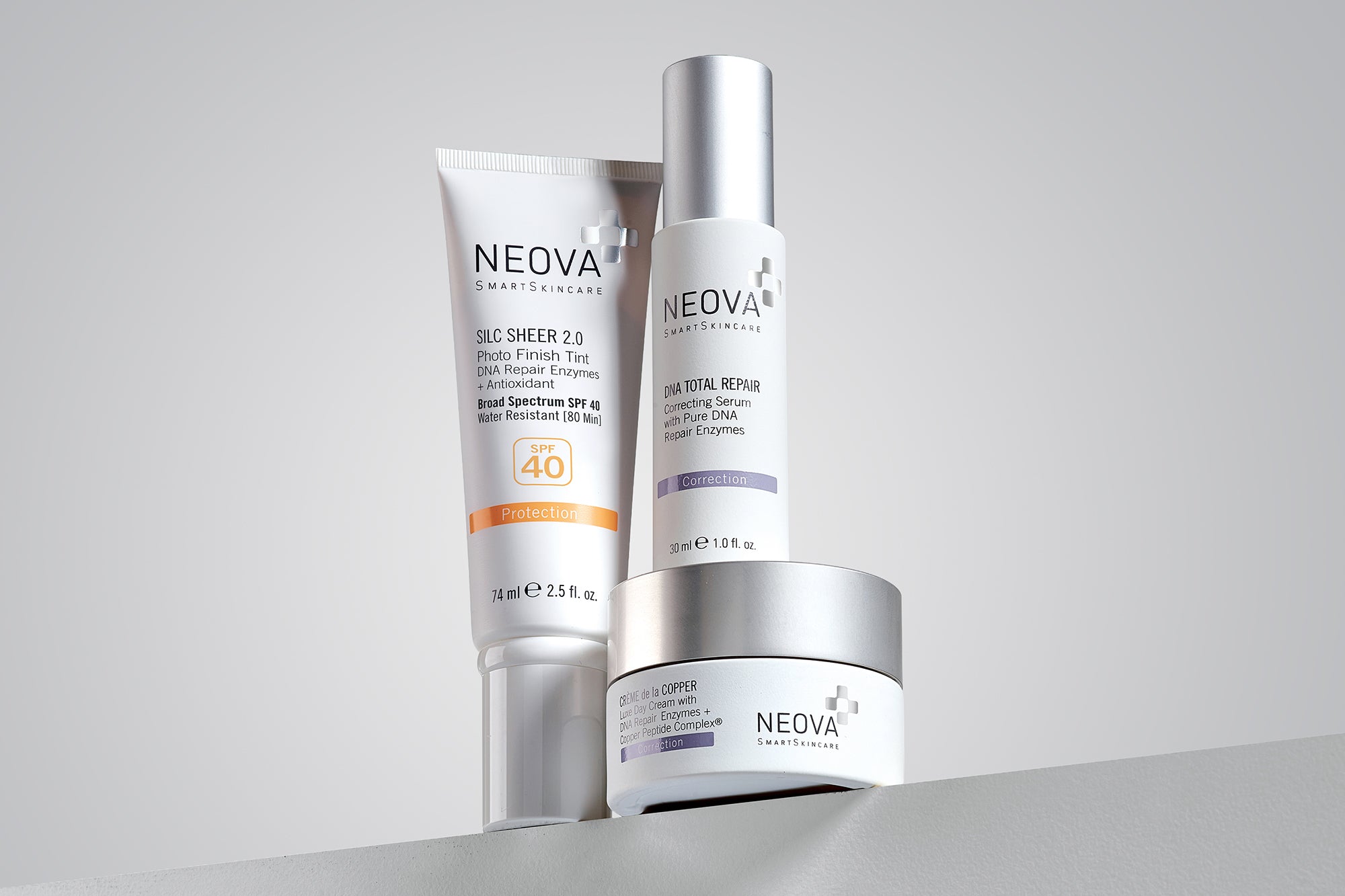
Most routines skip this step, even though it matters most for long-term skin health. DNA Total Repair uses three DNA repair enzymes, photolyase, endonuclease, and OGG1, that work to correct UV-induced DNA damage at the cellular level. Rather than just addressing surface symptoms, this correction serum targets the actual mutations UV exposure leaves behind, which is what sets DNA repair enzymes skincare apart from a typical antioxidant product. Consider it a sun damage repair serum for anyone wondering how to repair sun damaged skin after a summer of cumulative exposure.
Use it during the day or at night, so it can support your skin's natural repair cycle while you sleep.
Round Out Your Routine
After your antioxidant and DNA repair serums, round out your routine with a dedicated moisturizer, like Daily Moisture, to replenish hydration and support the skin barrier. In the morning, always finish with a broad-spectrum sunscreen SPF 40+, such as Silc Sheer 2.0, to help protect skin from ongoing UV exposure. Antioxidants and DNA repair enzymes complement sunscreen, but they do not replace it.
Which Products Fit Your Skin
Not every skin type needs to start in the same place.
-
Reactive or sensitive skin: Start with Power Defense to rebuild barrier strength before introducing an active serum. Add C 20+ a few times a week once your skin tolerates it well.
-
Oily or acne-prone skin: C 20+ works well here since vitamin C is lightweight and won't clog pores. Follow with a thin layer of Power Defense.
-
Mature or visibly sun-damaged skin: DNA Total Repair should take priority at night, paired with C 20+ in the morning for full-day antioxidant coverage.
-
Normal or combination skin: All three products can typically be layered together as outlined in the routine above.

C 20+ vs. DNA Total Repair: Which Do You Need First?
Both products fight oxidative damage, but they work at different stages of the process. Here's how they compare:
|
C 20+
|
DNA Total Repair
|
|
Primary function
|
Neutralizes free radicals in real time
|
Repairs existing UV-induced DNA damage
|
|
Key ingredient
|
20% L-ascorbic acid
|
Photolyase enzyme technology
|
|
Best time to use
|
Morning
|
Night and/or Morning
|
|
Best for
|
Daily prevention, hyperpigmentation, dullness
|
Visible sun damage, deeper cellular repair
|
|
Pairs with
|
Sunscreen (layer underneath)
|
Power Defense (layer after)
|
If you can only start with one, choose based on your main concern: C 20+ for prevention and brightening, DNA Total Repair for correcting existing damage. Most post-summer routines eventually use both.
Antioxidants and Long-Term Skin Aging
Consistent use of anti aging antioxidants matters for more than this summer's damage. It also plays into how to prevent premature skin aging over time. Oxidative stress is cumulative, so each unprotected exposure builds on the last one. Ingredients that protect skin from aging work by interrupting that buildup, which is a big reason dermatologists tend to frame antioxidants as a year-round habit rather than a seasonal fix.
Other environmental stressors, like pollution, blue light, and temperature extremes, trigger a similar free-radical response. That's part of why a well-formulated daily antioxidant moisturizer like Power Defense still earns a place in your routine long after summer ends.
FAQ: Antioxidants and Sun Damage Recovery
What is the best antioxidant serum for sun damage?
A stabilized vitamin C serum, like C 20+ with 20% L-ascorbic acid, is one of the most effective options for addressing free radical damage and lingering hyperpigmentation from sun exposure. For deeper DNA-level damage, pairing it with a repair serum like DNA Total Repair gives more complete coverage.
Should I buy a vitamin C serum or a DNA repair serum first?
If you're building a routine from scratch, start with DNA Total Repair for daily support. Add C 20+ to your routine for additional antioxidant support. Most post-summer routines benefit from both, since they target different stages of UV damage.

Is a 20% vitamin C serum too strong for sensitive skin?
Not necessarily, but concentration matters less than formulation stability. C 20+ is formulated to minimize irritation while still delivering a clinically meaningful concentration. If you're new to vitamin C, introduce it a few times a week before moving to daily use.
How soon will I see results from an antioxidant skincare routine?
Most people notice improvements in texture and tone within a few weeks of consistent use. DNA repair and collagen support happen at a cellular level, so deeper results, like reduced fine lines or more even pigmentation, typically build over several months.
Shop the Post-Summer Recovery Routine
A quick recap if you're ready to build your routine:
|
Product
|
What It Does
|
When to Use
|
|
C 20+
|
Neutralizes free radicals, brightens hyperpigmentation
|
Morning
|
|
Power Defense
|
Strengthens the skin barrier, defends against daily environmental stress
|
Morning and/or night
|
|
DNA Total Repair
|
Repairs UV-induced DNA damage at the cellular level
|
Night and/or morning
|
Used together, these three products cover prevention, defense, and repair, the full arc of post-summer skin recovery.

The Bottom Line
Skin doesn't stop processing summer just because your tan has faded. Oxidative stress on skin from UV exposure lingers, compounds, and quietly accelerates aging if it's left unaddressed. A clinically formulated antioxidant skincare routine, one that neutralizes free radicals, strengthens the barrier, and repairs DNA damage, does more for sun damage skincare than anything aimed only at surface signs.
This article is intended for general educational purposes and does not replace personalized advice from a licensed dermatologist.