
Article: Sun Damage vs. Normal Aging: How to Tell the Difference
Sun Damage vs. Normal Aging: How to Tell the Difference
Sun Damage vs. Normal Aging can look similar, but understanding the difference can help you choose a more targeted skincare routine.
Look closely at your skin and you'll notice fine lines, changes in texture, and shifts in tone. Not all of these changes come from time alone. A large portion of what people call "aging skin" actually comes from years of ultraviolet exposure, a process dermatologists refer to as photoaging. Knowing which changes are simply age related and which come from the sun makes it easier to choose the right approach for your skin, instead of relying on a generic routine.

Ready to Target Visible Sun Damage? Shop the DNA Repair Collection.
Sun Damage vs. Normal Aging: Two Different Processes
Skin ages in two separate ways, and they don't move at the same pace.
Intrinsic aging is the process built into our genes. Collagen and elastin production slow down gradually, cell turnover decreases, and oil glands become less active over time. This kind of aging tends to be even and gradual. It shows up across the whole body, including areas that get little sun, such as the inner arm or the underside of the chin.
Extrinsic aging, largely caused by cumulative UV exposure, follows a different pattern. It tends to happen faster and less evenly, and it concentrates on the areas that see the most sun: the face, neck, chest, hands, and forearms. Compare the back of your hand to your inner wrist sometime. You're looking at two different aging timelines on the same body.
Fine Lines
Lines related to intrinsic aging are usually shallow and predictable. They form where the face moves most often, such as around the eyes or mouth, as collagen support gradually declines.
Sun related lines tend to look different. UV radiation breaks down collagen and elastin faster than the body can rebuild it, and it does so unevenly. This often results in a crosshatched or crepey texture, with fine lines running in several directions rather than following one clear expression pattern. These lines tend to cluster on the cheeks and around the eyes, where sun exposure is heaviest.

Photo Credit: QnA Medical Spa, LA
Uneven Tone
With intrinsic aging, tone usually becomes a bit more dull over time as circulation and cell turnover slow. The change tends to be fairly even across the skin.
Sun exposure creates a different kind of unevenness. UV rays prompt melanocytes, the cells responsible for pigment, to become more active in some areas than others. This can lead to patches of discoloration, redness, or mottling that don't follow any single pattern. That's part of why sun-exposed skin often looks blotchy in a way that skin aged mostly through time, without much sun exposure, typically does not.

Photo Credit: Pure Dermatology
Rough Texture
As skin ages intrinsically, it tends to thin gradually as collagen density decreases. It often feels softer, sometimes more fragile.
UV damage can have the opposite effect on texture. In response to repeated exposure, the outer layers of skin may thicken and roughen. This shows up as a course, sometimes leathery feel, along with enlarged pores, particularly on the cheeks, nose, and forehead.

Dark Spots
This is one of the clearest ways to tell the two apart. Solar lentigines, the flat brown spots often called sun spots or age spots, are almost always tied to UV exposure. They form when years of sun exposure trigger localized overproduction of melanin. Skin that has had consistent sun protection rarely develops this type of spotting from age alone. If you notice distinct, well-defined brown patches on your face, hands, or chest, that's a sign of sun exposure rather than the simple passage of time.

Telling the Difference between Sun Damage versus Normal Aging
|
Sign |
Intrinsic Aging |
Sun Damage |
|
Fine lines |
Shallow, tied to expression |
Crosshatched, multi-directional |
|
Tone |
Evenly dulled |
Blotchy, mottled |
|
Texture |
Thinner, softer |
Thicker, rougher |
|
Dark spots |
Uncommon |
Well-defined, common |
|
Distribution |
Whole body |
Areas with the most sun exposure |
There isn't much you can do about the passage of time, but sun-related damage is largely preventable, and to some degree, treatable. Daily broad-spectrum SPF is still one of the most effective steps you can take for your skin's long-term appearance. Pairing that habit with ingredients that support cellular DNA repair, along with antioxidants that help offset free-radical damage, gives skin more of what it needs to recover from the UV exposure that's hard to avoid entirely.
Knowing which changes in your skin come from time and which come from the sun is a useful starting point for choosing skincare that addresses the actual cause, rather than just the symptoms on the surface.

Cumulative UV Exposure Matters
Photoaging isn't usually the result of one or two bad sunburns. It builds up from repeated, everyday exposure: the short walk to your car, the cloudy afternoons when sunscreen felt unnecessary, the hours spent near a sunny window at your desk.
One of the more striking illustrations of this cumulative UV exposure comes from a 2012 case report in the New England Journal of Medicine, describing a truck driver whose left side of his face, the side facing the window for decades, showed visibly thicker, more deeply wrinkled skin than his right [1]. He had never been sunburned on the job. The damage came entirely from ordinary daily exposure through glass, since UVA rays pass through most car and office windows, while UVB largely does not.
That distinction matters. UVA makes up around 95 percent of the UV radiation that reaches the earth's surface, and it penetrates deep into the dermis, where it breaks down collagen and elastin fibers with each exposure, whether or not the skin ever visibly burns [2]. UVB is more intense but more easily blocked, and it acts mainly on the epidermis, where it damages DNA directly and is the primary driver of sunburn.
Because UVA damage rarely produces any immediate symptoms, it's easy to underestimate. There's no redness to signal that anything happened, no discomfort the next day. A five-minute walk to get coffee, a window seat on a long drive, an afternoon at a desk near natural light: none of it feels significant in the moment. But the effects compound over years, which is why skin can look noticeably different at age 45 than it did at 35, even without any single memorable incident to point to.
The Role of DNA Repair Enzymes
Each time skin is exposed to UV light, the DNA inside skin cells can sustain damage, often in the form of structures called cyclobutane pyrimidine dimers, or CPDs. If this damage isn't repaired, it accumulates over time, contributing to visible photoaging and to longer-term skin health concerns.
Skin has its own natural systems for repairing this kind of damage, including enzymes that identify and correct UV-related DNA changes. That repair capacity isn't unlimited, though, and it can decline with age and with the amount of cumulative sun exposure a person has had. This is where certain skincare ingredients play a role. Formulas designed to support the skin's natural DNA repair enzymes work at a cellular level, addressing damage after it happens rather than only treating what's visible on the surface.
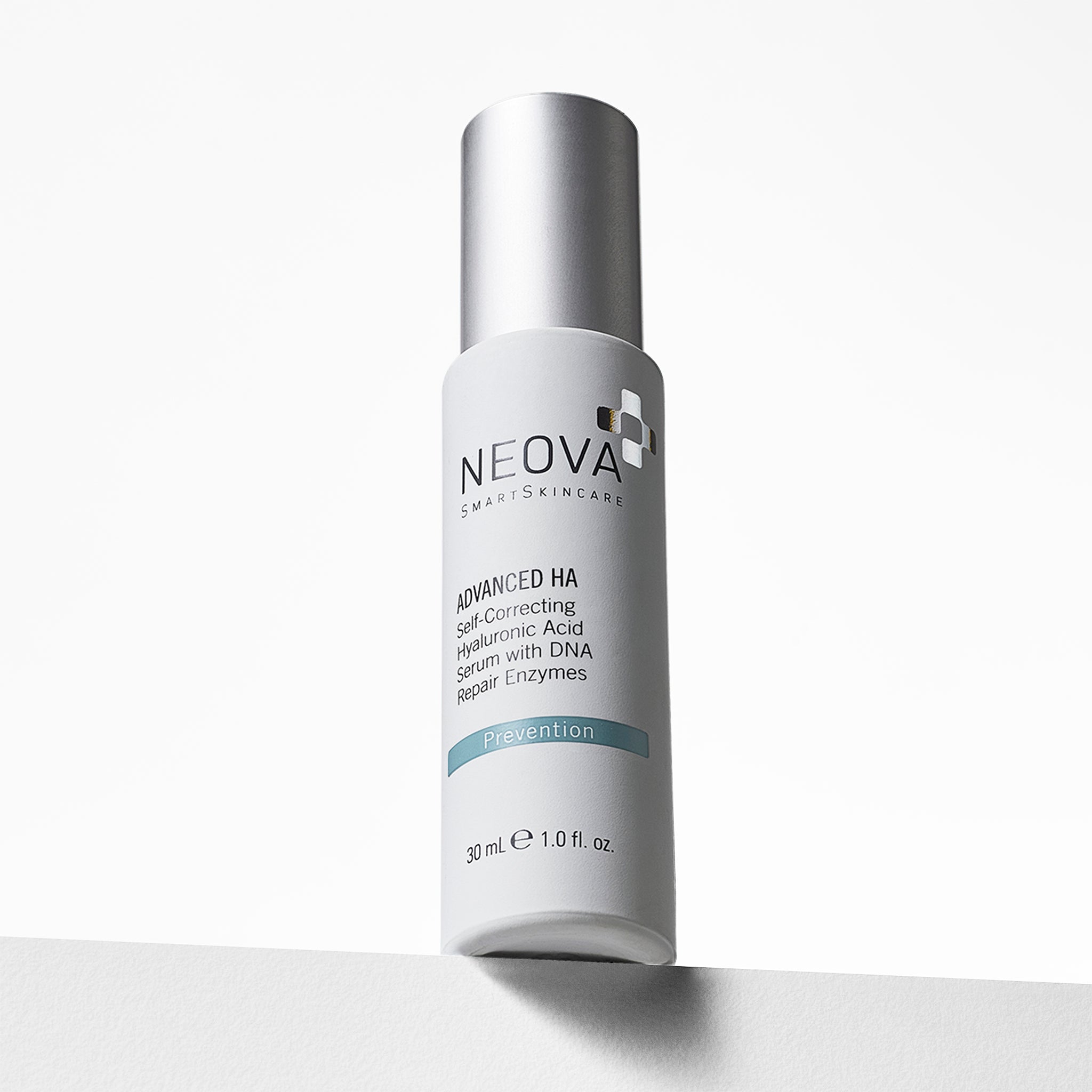
This is part of the thinking behind NEOVA's DNA Repair technology, which combines specific DNA repair enzymes (Photolyase, UV-Endonuclease, and OGG-1) with ingredients that help support the skin's own repair processes, so existing damage has a better chance of being corrected instead of simply covered up.

NEOVA's DNA Repair Collection
If you're looking to address existing sun damage rather than just prevent more of it, these are good places to start.
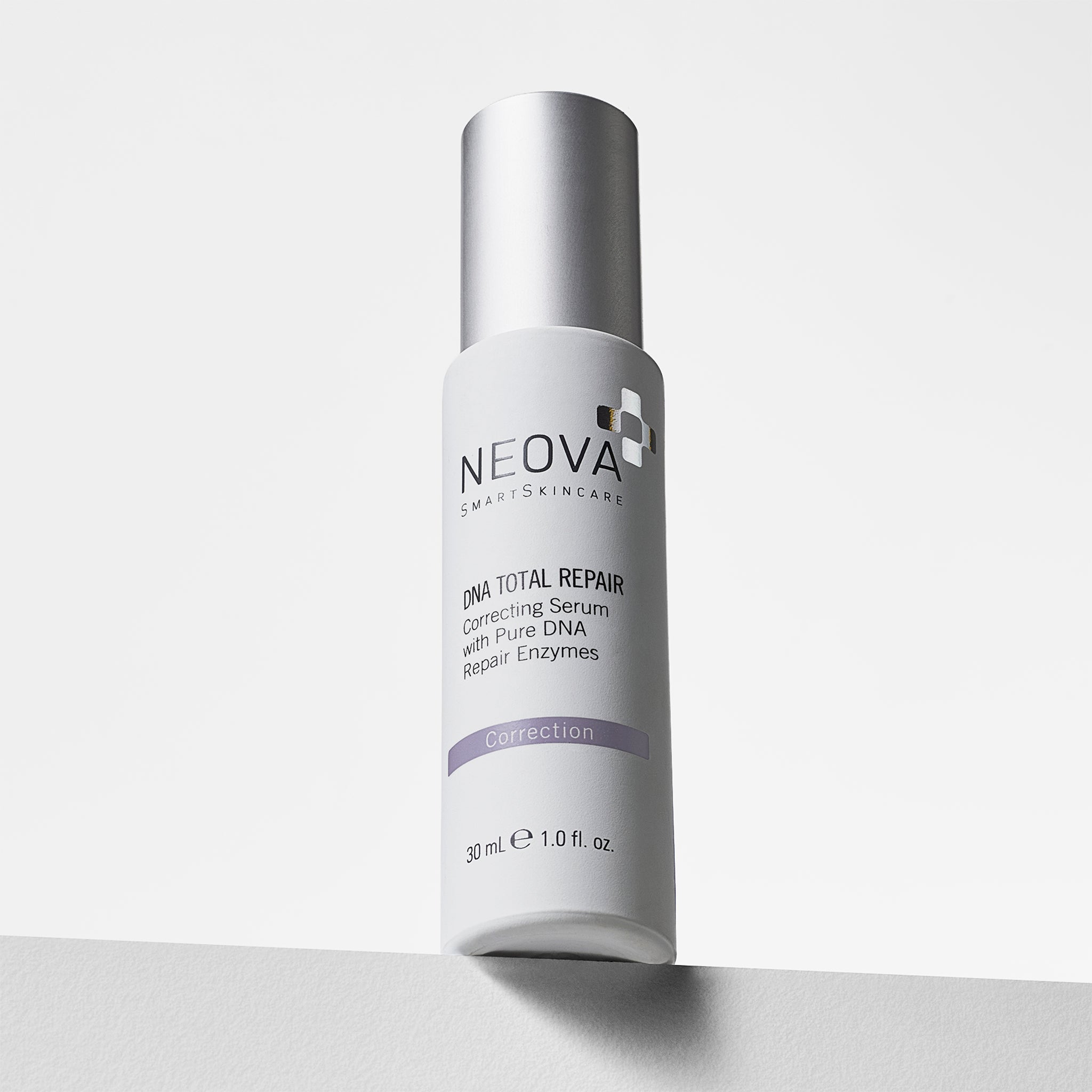
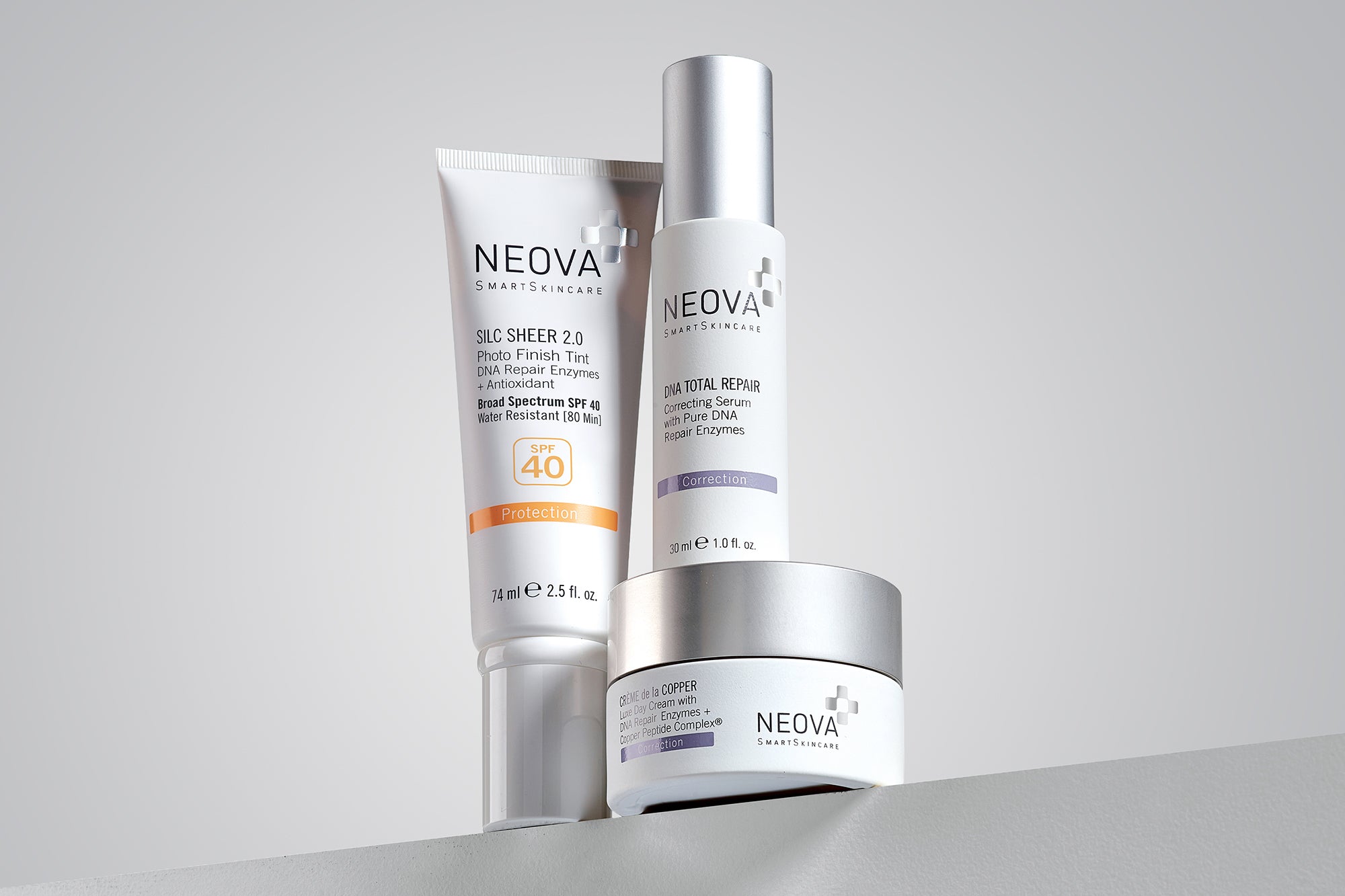
DNA Total Repair
DNA Total Repair is NEOVA's core serum and the foundation of the DNA Repair line. It's formulated with three DNA repair enzymes along with an antioxidant complex, designed to work on fine lines, uneven tone, and the visible effects of UV exposure with twice daily use. It's meant to be applied right after cleansing, before moisturizer or sunscreen.

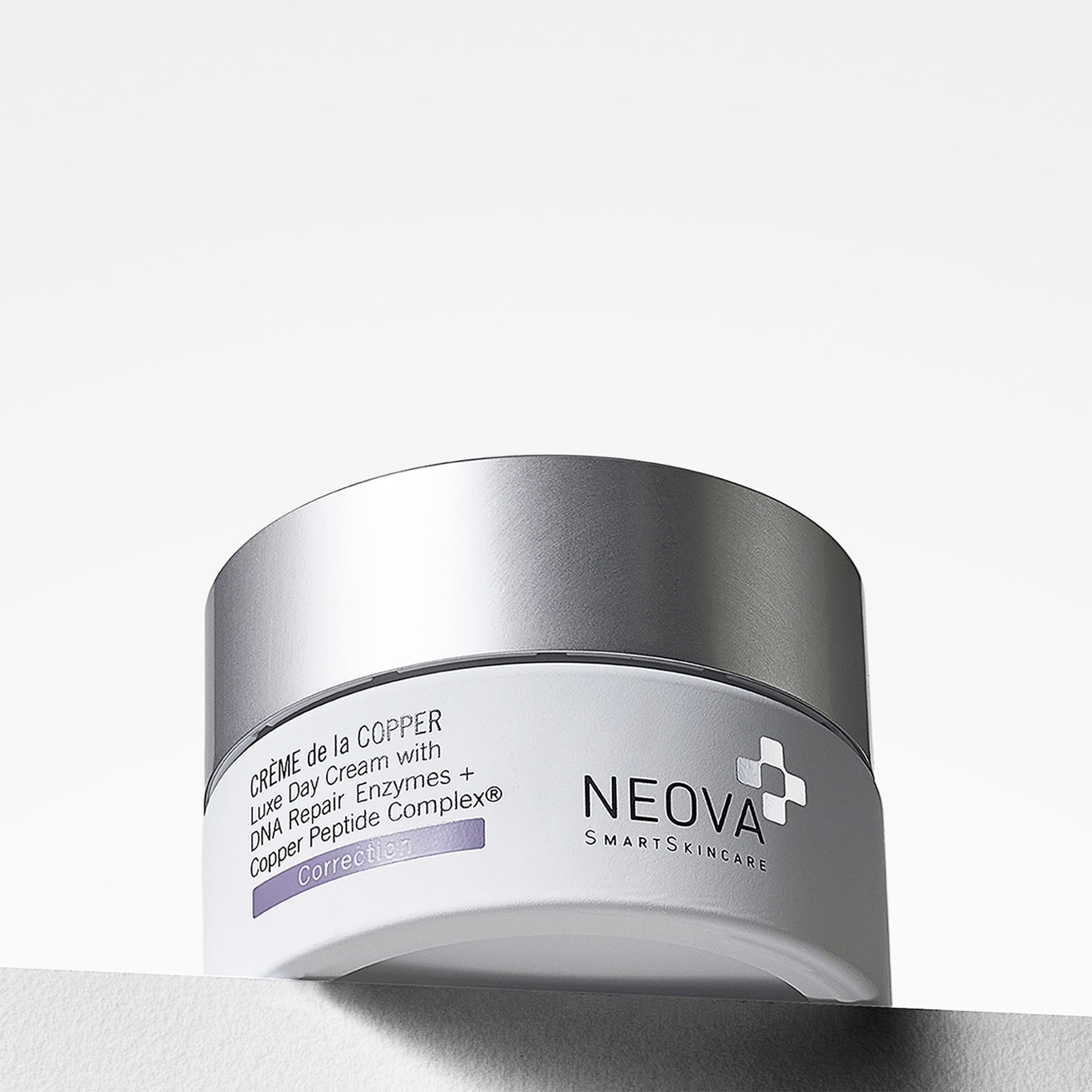
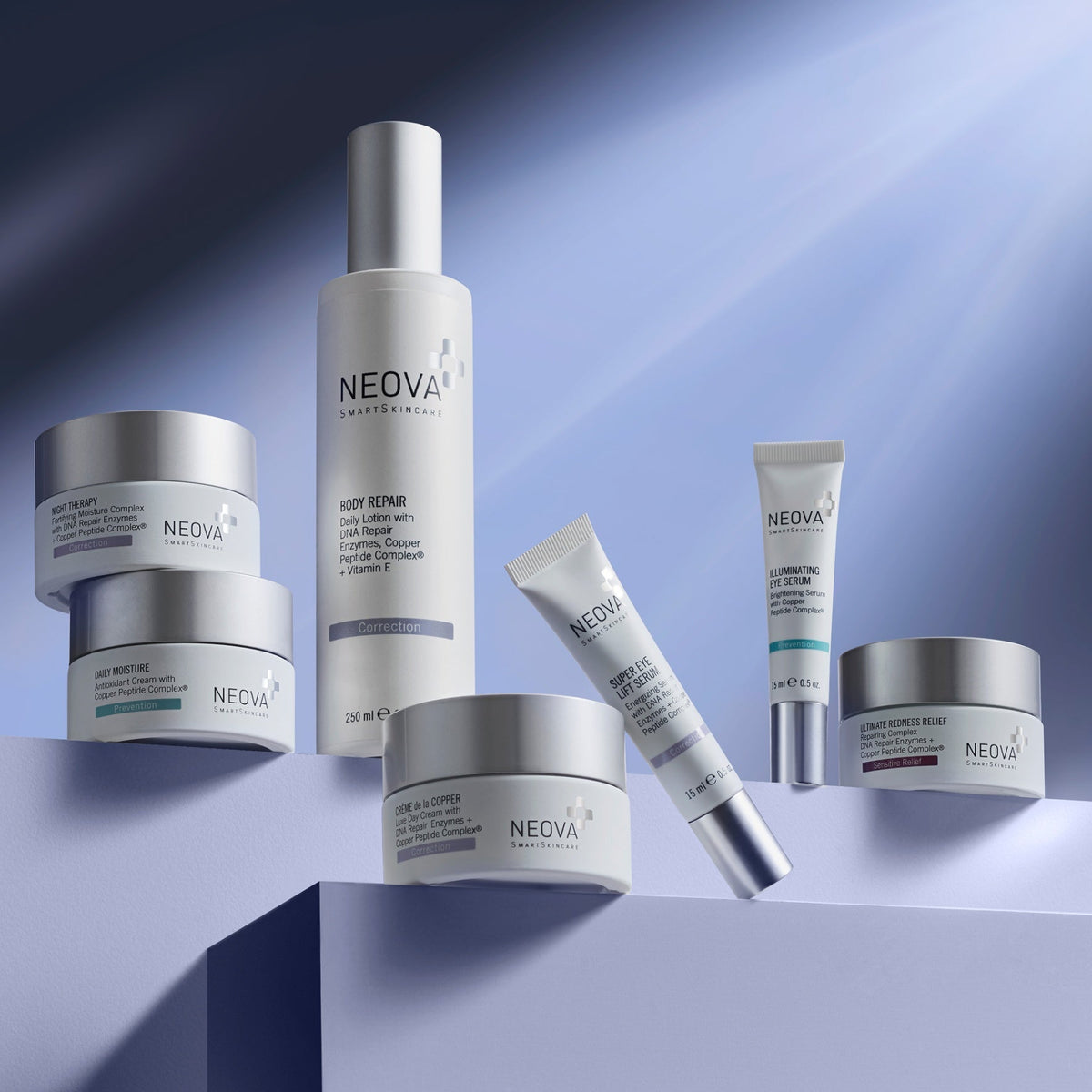
Crème de la Copper
Crème de la Copper is a daily moisturizer built with NEOVA's DNA CoFactor® technology (Copper Peptide Complex® + DNA repair enzymes). It's a good option for layering over DNA Total Repair when skin needs more hydration and support for firmness.

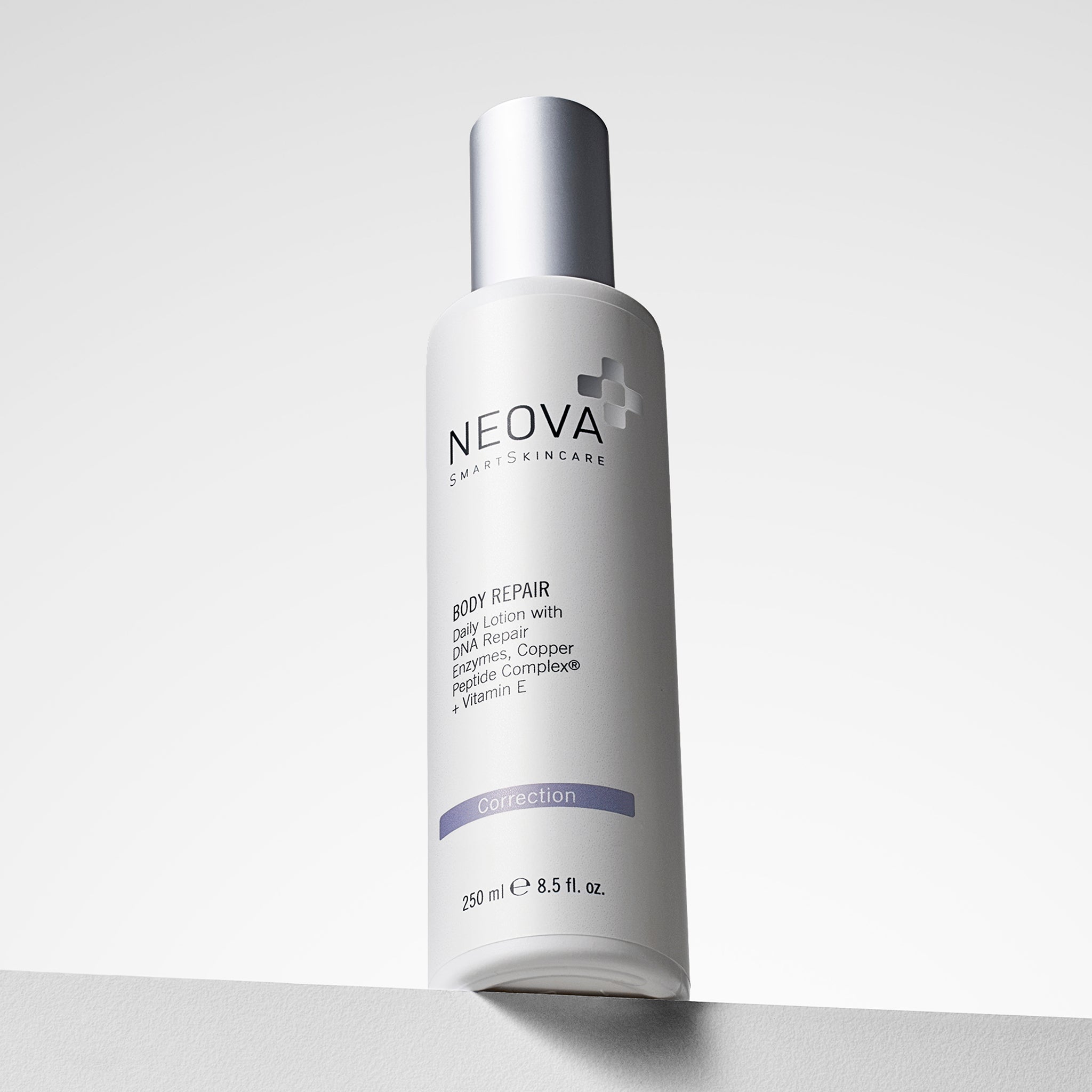
Body Repair
Body Repair brings the same enzyme and antioxidant technology to the chest, hands, and other areas outside the face that see plenty of sun over the years but rarely get targeted treatment.

Silc Sheer 2.0 / Everyday
Silc Sheer 2.0 or Everyday round out the routine as broad-spectrum sunscreens. Since ongoing sun exposure is what creates the damage these formulas are designed to correct, pairing them with daily SPF is what keeps the whole approach working.

DNA Repair System
For anyone who wants all of this in one place, the DNA Repair System bundles the core steps, cleanser, DNA Total Repair, Crème de la Copper, an eye treatment, and SPF, into a single daily routine.


Frequently Asked Questions about Sun Damage + Normal Aging
Can sun damage be reversed once it's already visible?
To a degree, yes. Skin has natural repair mechanisms, and ingredients that support DNA repair enzymes can help correct existing UV-related damage over time. Full reversal isn't realistic for deep, long-standing damage, but many people see measurable improvement in tone, texture, and fine lines with consistent use of targeted products alongside daily SPF.
How long does it take to see results from a DNA repair serum?
Results vary. Most people using a product like DNA Total Repair notice initial changes in texture and tone within a few weeks, with more visible improvement in fine lines and pigmentation building over one to three months of consistent, twice daily use.

Do I still need sunscreen if I'm using a DNA repair product?
Yes. DNA repair skincare works best as part of a routine that includes daily broad-spectrum SPF. Repair products address damage after it happens, while sunscreen limits how much new damage occurs in the first place. Skipping SPF while relying only on repair products means working against a moving target.
Is sun damage only a concern for people who tan or sunburn easily?
No. UVA exposure, the type responsible for most long-term collagen breakdown, doesn't require a burn to cause damage. It happens through car and office windows and on cloudy days, regardless of skin tone or how easily someone burns. Anyone with regular daily sun exposure, intentional or not, accumulates some degree of photoaging over time.

Start Repairing the Damage You Can See
Fine lines, uneven tone, rough texture, and dark spots don't all come from the same place, and treating them like they do usually means missing the mark. Once you know which changes are tied to years of UV exposure, it's much easier to build a routine that actually targets the cause.
NEOVA's Skincare collection with DNA Repair Enzymes is built around that idea: support the skin's own repair processes, protect against new damage, and give sun-exposed skin what it needs to recover.
Shop NEOVA's DNA Repair Collection
Sources
[1] Gordon JR, Brieva JC. Images in clinical medicine. Unilateral dermatoheliosis. N Engl J Med. 2012 Apr 19;366(16):e25. doi: 10.1056/NEJMicm1104059. PMID: 22512500.
[2] National Toxicology Program. 15th Report on Carcinogens [Internet]. Research Triangle Park (NC): National Toxicology Program; 2021 Dec 21. Ultraviolet-radiation-related Exposures. https://www.ncbi.nlm.nih.gov/books/NBK590946/.