The Ultimate Vacation Skincare Guide: What to Pack for Healthy Summer Skin
Vacation skincare starts before you leave home.
Whether you're escaping to a beachfront resort, exploring a historic European city, or embarking on a multi-destination summer itinerary, your skin faces a completely different set of environmental challenges while traveling than it does at home. Changes in climate, humidity, altitude, sun exposure, air travel, and disrupted sleep can all strain the skin barrier and accelerate visible signs of aging.
If you've spent years building a skincare routine that supports firmness, even tone, and resilience, travel can undo some of that progress faster than you'd expect. Mature skin already produces less collagen and renews itself more slowly than it once did, which means it has less margin for the dehydration, sun exposure, and barrier disruption that travel brings.
The good news: this doesn't require an entirely new regimen. With a few strategic adjustments, you can protect your results, support your barrier, and come home looking like you've simply been somewhere lovely, not like you've been through something.
This skincare guide covers what to pack, how to adapt your routine by destination, and the strategies that help your skin stay resilient before, during, and after your travels.

Why Vacation Skincare Matters
When you travel, your skin is exposed to conditions very different from what it experiences at home. Flights, increased sun exposure, shifting climates, disrupted sleep, and changes in routine all place additional stress on your skin and can show up quickly as dehydration, dullness, or uneven tone.
During air travel, transepidermal water loss (TEWL), the rate at which your skin loses moisture through its surface, increases. You may notice this as tightness, dryness, or a flatter, less luminous look after a long flight. Once you arrive, changes in humidity and temperature continue to challenge your skin barrier. Add in more time outdoors and higher UV exposure, and your skin is also managing increased oxidative stress, the kind that breaks down collagen and accelerates the fine lines and uneven pigmentation that become more noticeable with age.
This is where ingredient technology matters more than ever.
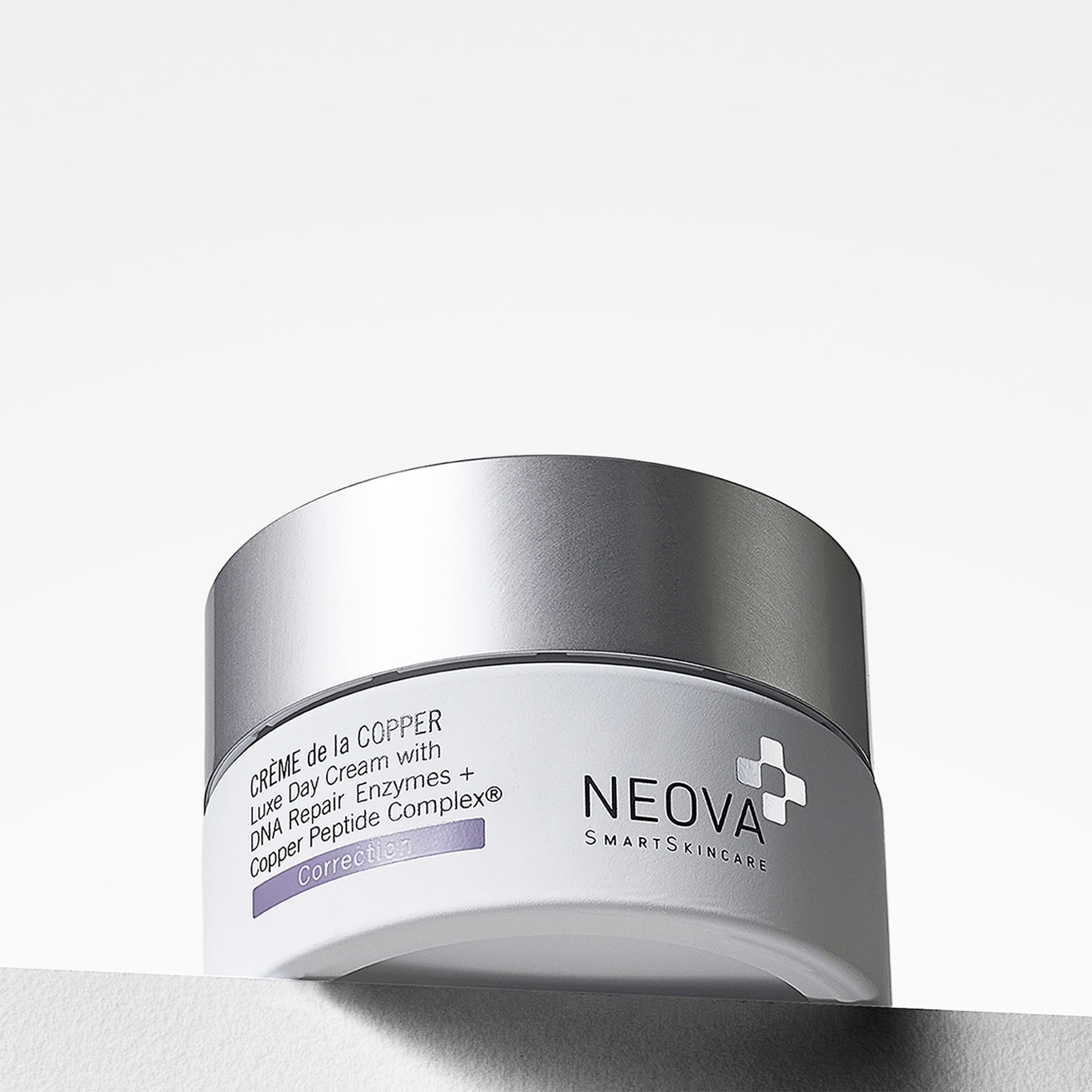
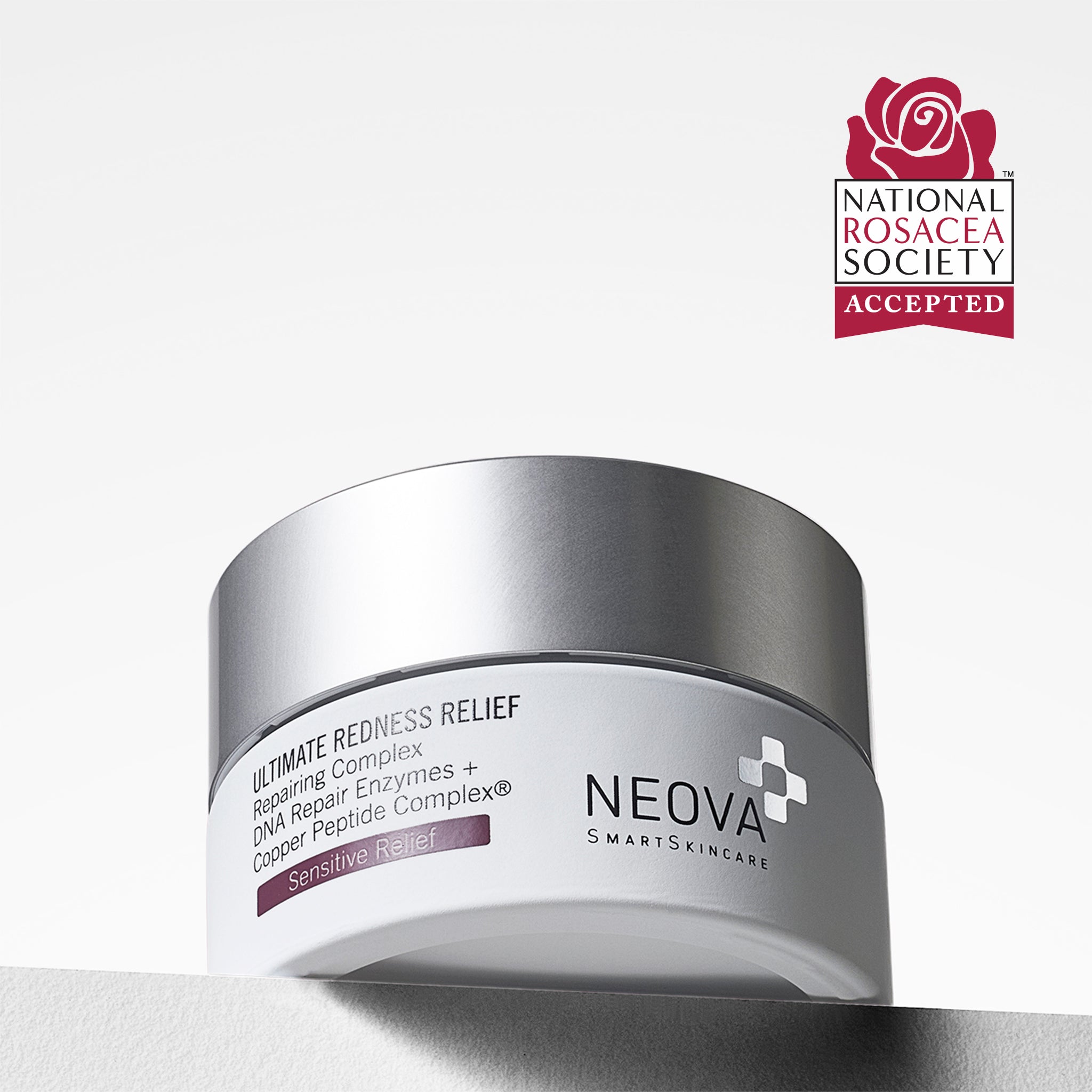
NEOVA's formulas are built around DNA repair enzymes, which work at a cellular level to help address existing UV damage rather than simply screening it out, and Copper Peptide Complex®, which supports your skin's own collagen and barrier repair processes. For skin that's already managing years of cumulative sun exposure, this kind of active support does more during travel than hydration alone.
A consistent vacation skincare routine gives your skin what it needs to stay resilient under changing conditions, and to return home looking like it never left.

The Traveler's Skincare Essentials Checklist
A practical travel skincare kit contains products that work hard, take up little space, and fit easily into your bag. Below is a simple packing list to help you build a routine that holds up no matter where you're headed.
Know Your Packing Limits
Many trips come with size or space rules for liquids, gels, and creams. This applies whether you're flying, taking a road trip with limited luggage space, or packing light for a cruise.
A few habits that help:
- Choose travel-size skincare (3.4 oz. / 100mL and under) whenever possible.
- Pick multi-use products that simplify your bag.
- Keep your kit in one clear, quart-sized pouch so it's easy to find and easy to repack.
Your Core Travel Skincare Checklist
A few key products cover most skin needs on the go:
- Gentle cleanser – A mild, low-foam formula or exfoliator that won't strip or over-dry skin that's already more delicate than it once was.
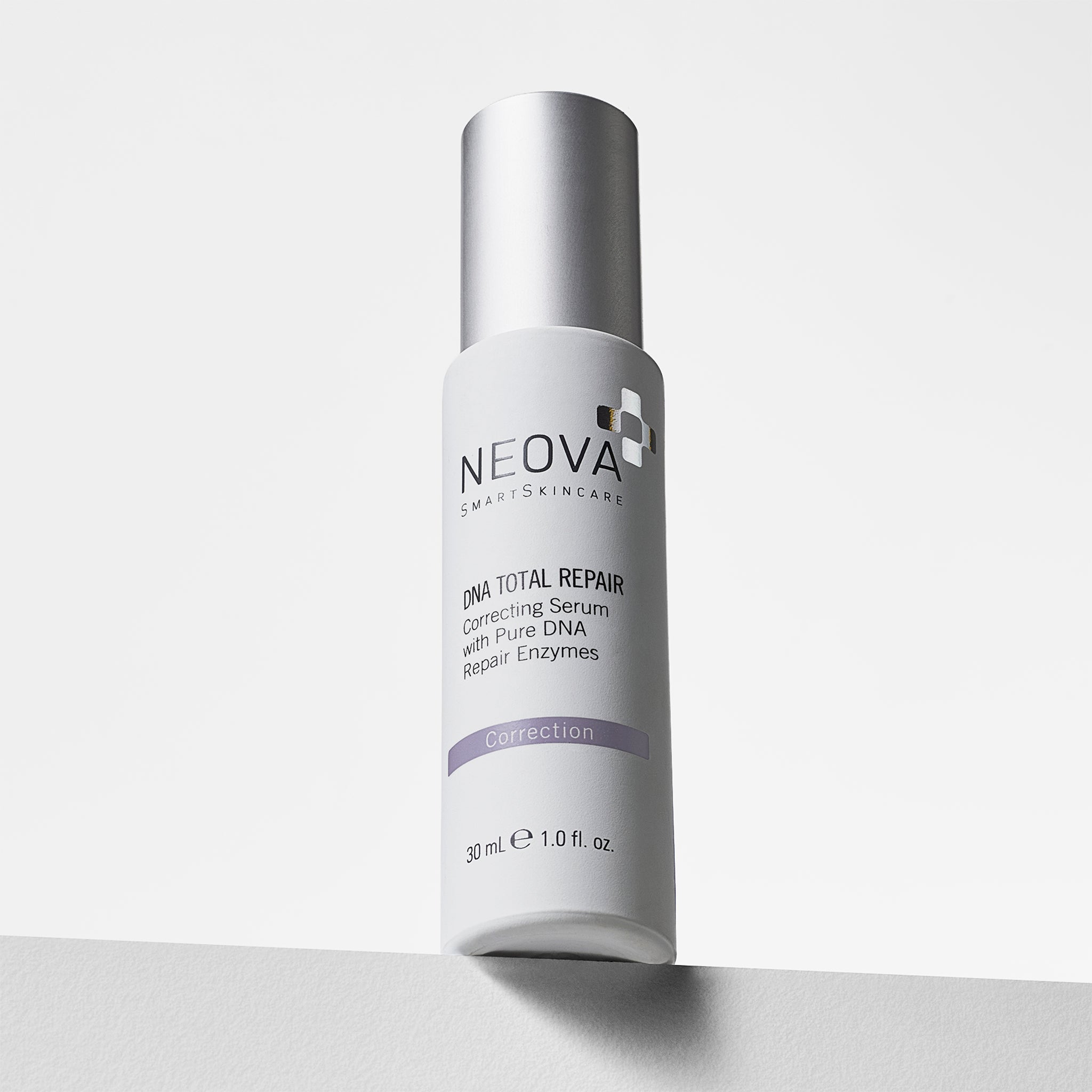
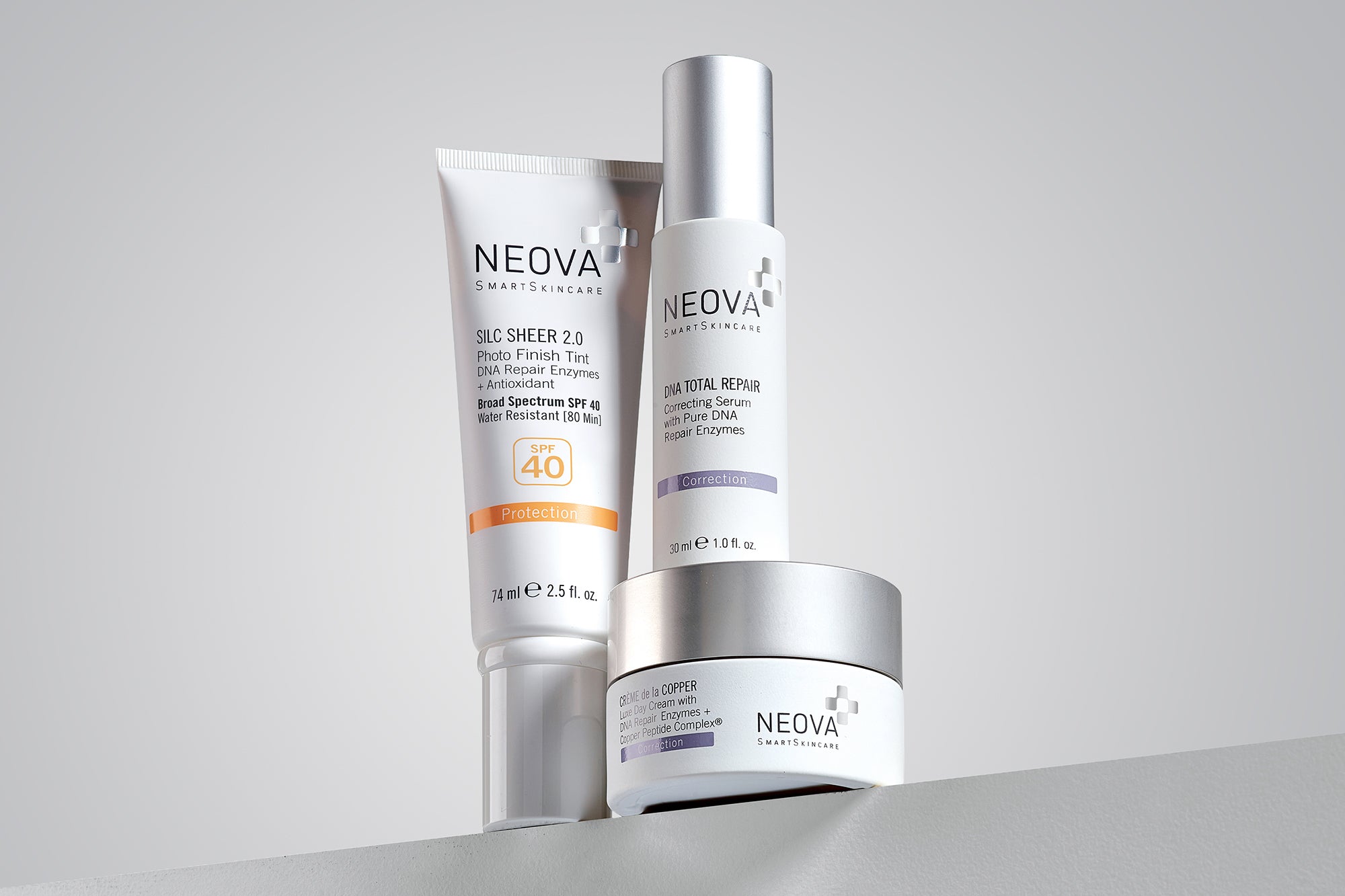
- Correcting serum – A solution like DNA Total Repair helps defend against the cumulative UV stress that contributes to collagen breakdown and uneven tone.
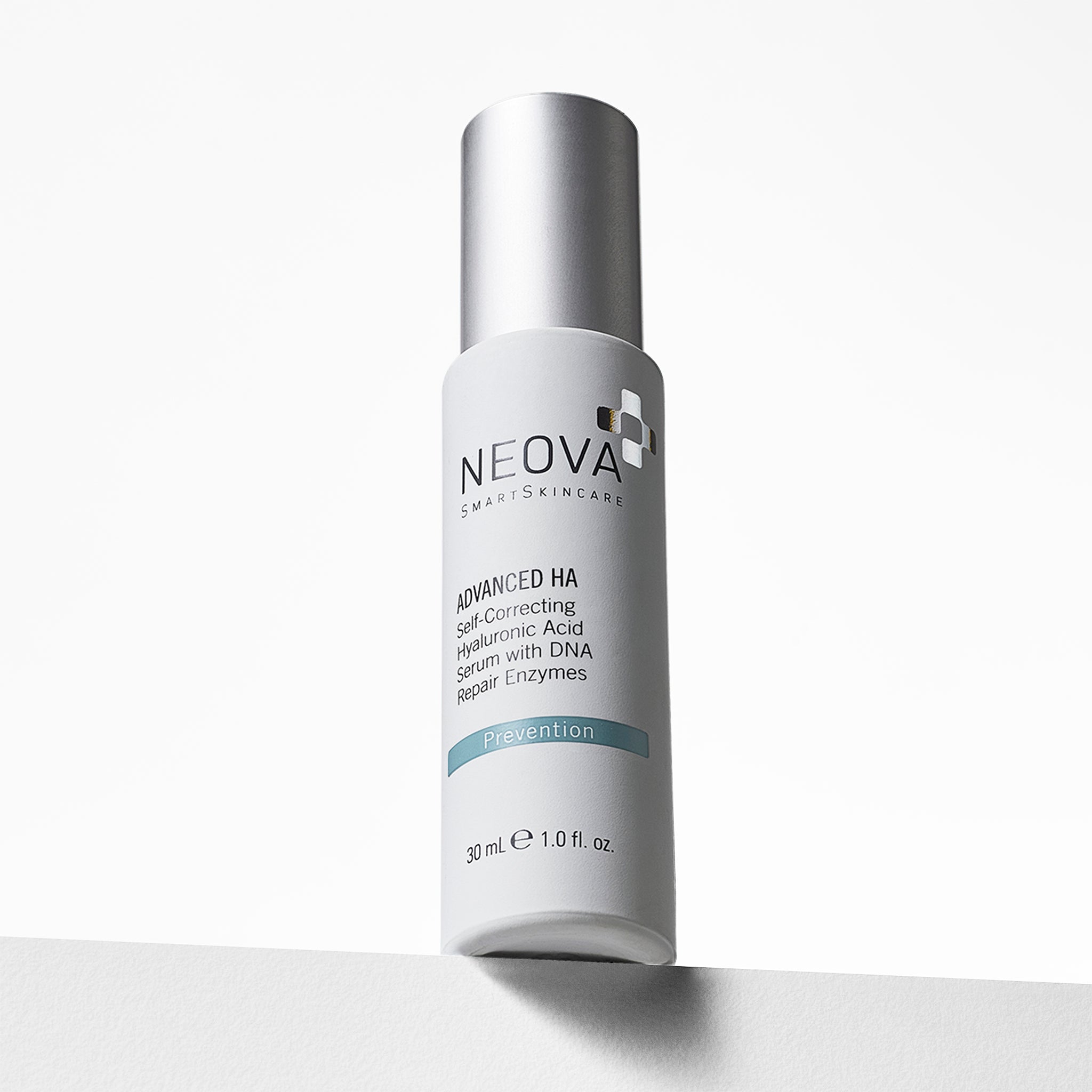
- Hydrating serum – A hyaluronic acid–based treatment, such as Advanced HA, that adds moisture exactly where mature skin tends to lose it first: around the eyes, mouth, and cheeks.
- Barrier repair moisturizer – Look for ceramides or copper peptides, which support the skin's structural integrity, not just surface hydration.
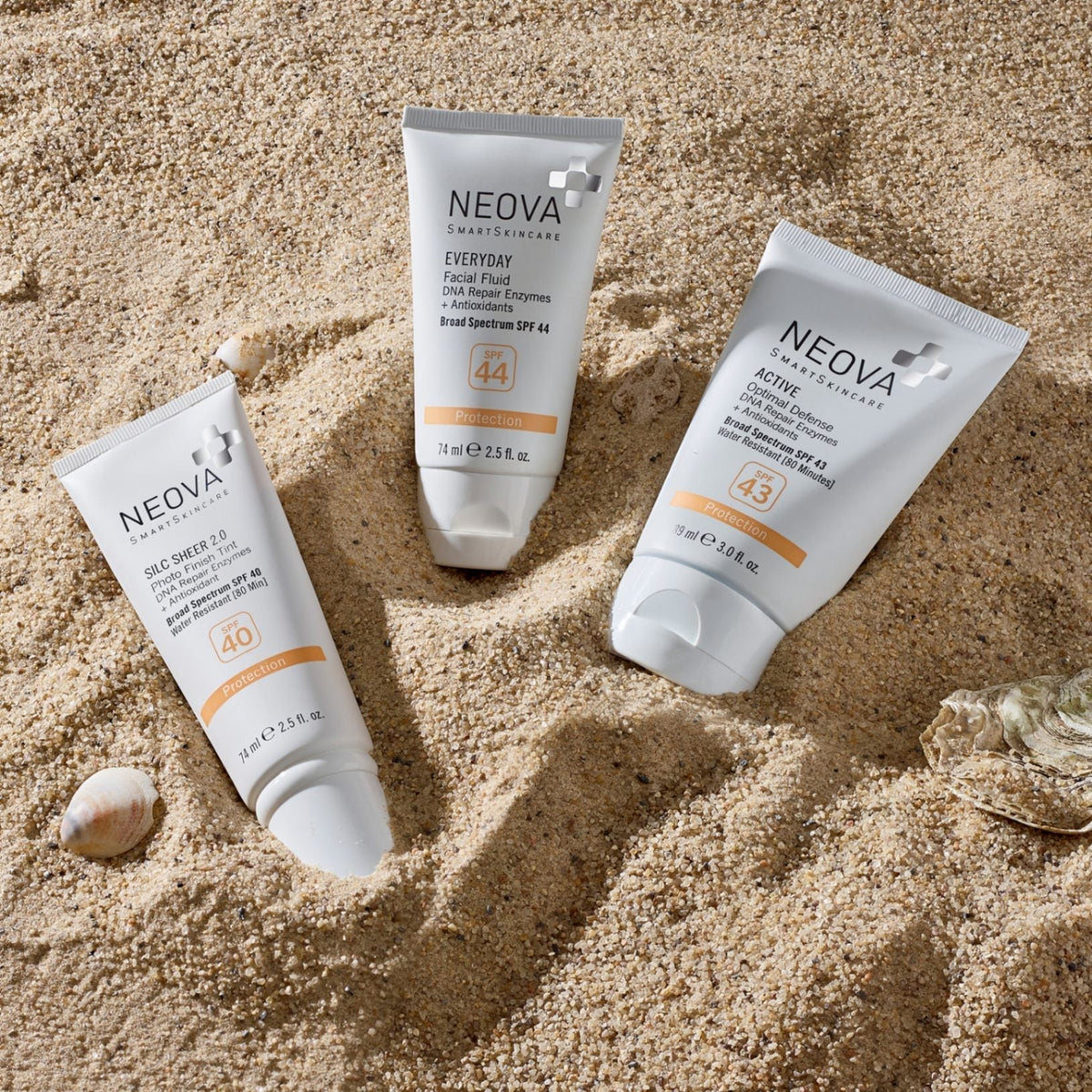
- Broad-spectrum SPF – NEOVA's Silc Sheer SPF 40 pairs sun protection with DNA repair technology, a clinically-recommended pick for daily travel use.
- Targeted treatment – Optional, but worth packing for specific concerns like hyperpigmentation, fine lines, or under-eye crepiness.
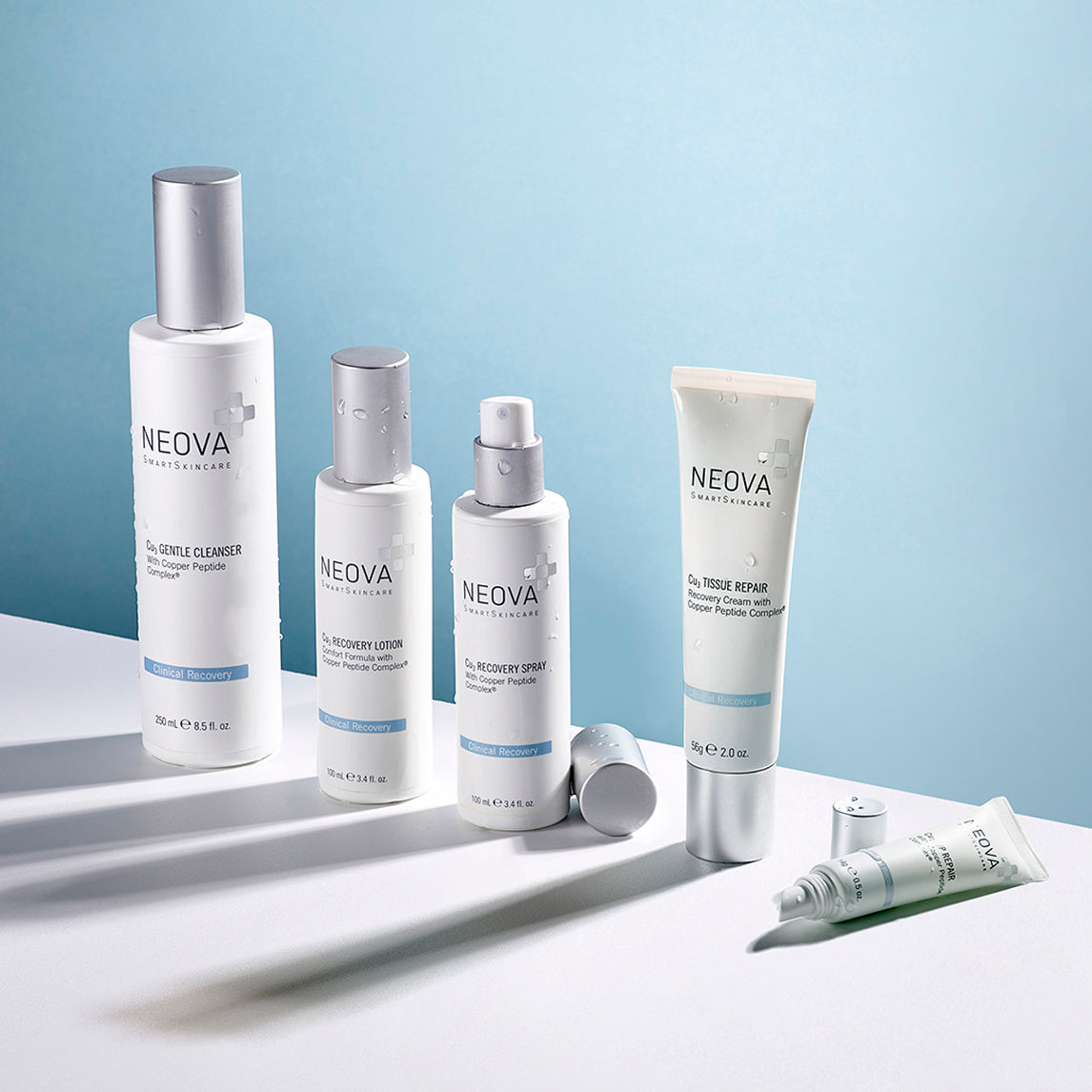
NEOVA's Skincare collection features everyday essentials that are easy to pack (TSA-approved 3.4 mL and under), so you can maintain your skincare routine wherever you go.

A Universal Vacation Skincare Routine
Your vacation skincare routine should work in two phases: protect in the morning, repair at night. The goal is to keep your skin supported as conditions shift throughout the day, regardless of climate.
Morning Routine: Protection-Focused
- Use your gentle cleanser or exfoliator to remove overnight buildup without disrupting the skin's acid mantle.
- Follow with your antioxidant serum and optional treatment serum to help defend against free radical damage from UV exposure, pollution, and general environmental stress.
- Layer a mid-to-lightweight hydrator, like Cu3 Recovery Lotion, to support moisture retention in shifting climates and air-conditioned environments.
- Seal it in with a broad-spectrum lotion sunscreen. Silc Sheer 2.0 SPF 40 combines hybrid chemical and mineral protection with DNA repair enzymes to defend daily against UV damaged while supporting long-term skin health.

Evening Routine: Repair-Focused
-
Lightly exfoliate with a gentle peel to dissolve sunscreen and makeup, and fully clear the skin without over-stripping.
-
Apply a barrier-supporting serum with copper peptides or ceramides. NEOVA's Serums Collection offers targeted evening repair options well-suited to travel.
-
Finish with your nourishing moisturizer to lock in hydration and support the overnight regeneration.

Skincare for Different Vacation Types
Not every vacation places the same demands on your skin. Adjusting your approach to the destination is one of the most effective things you can do to protect your results while you travel.
Skincare for a Beach Vacation
A beach routine should prioritize three things: UV protection, barrier support against salt and wind, and deep post-sun hydration.
- Use a water-resistant, broad-spectrum sunscreen with SPF 40 or higher, reapplying every 80 minutes during swimming or extended exposure.
- Saltwater strips natural oils and increases dryness, so follow swimming with a replenishing moisturizer to restore the barrier.
- Sun exposure is the single biggest driver of visible aging and pigmentation, so consider this destination type your highest-vigilance one for reapplication.

Skincare for Tropical & Humid Climates
Humidity can make skin feel oilier on the surface while it's still losing moisture underneath. The goal here is balance: hydration without heaviness.
Resist the instinct to skip moisturizer in humid heat. Air conditioning, sun, and heat continue to deplete hydration regardless of how the air outside feels.
A gel-based serum, like Power Defense, paired with a lightweight, water-based moisturizer hydrates without clogging pores or feeling heavy.

Skincare for City Travel
Urban environments expose skin to higher levels of pollution, including particulate matter, which generates free radicals and accelerates oxidative stress, the same process responsible for collagen breakdown and dullness.
Combine a high-potency antioxidant serum, such as C 20+, with broad-spectrum protection sunscreen to defend against this kind of environmental damage throughout long, active travel days.
NEOVA's Antioxidants Collection is built to support this kind of daily environmental defense while helping maintain luminosity.

Skincare for Mountain and Cold Climates
Mountain travel combines two compounding stressors: low humidity and high-altitude UV exposure. Together, they accelerate moisture loss and raise sun damage risk.
- UV radiation intensifies with elevation, and snow and ice reflect a significant portion of it back onto the skin, making sun protection (SPF 40+) just as essential on the slopes as on the beach.
- Cold, dry air and indoor heating strip moisture quickly, leading to tightness, flaking, and heightened sensitivity. A rich, occlusive moisturizer, like Overnight Repair, helps seal in hydration against wind-driven moisture loss.
- The skin around the lips and eyes is thinner and more vulnerable to cold, wind, and UV reflection. A targeted lip repair treatment and eye serum are worth the extra space in your bag.

Sun Protection: The Non-Negotiable Step
Sunscreen is the single most important step in any vacation skincare routine. UV radiation is the primary external driver of photoaging, pigmentation, and skin cancer risk. Its effects are cumulative over a lifetime, which is exactly why consistent protection matters more the longer you've been investing in your skin.
Look for sun protection with SPF 30 or higher and choose a water-resistant formula if outdoor or beach activity is planned. NEOVA's Protection Collection includes tinted and untinted SPF options for daily and active use
A single morning application provides roughly 80 minutes of effective protection under normal conditions, less with direct sun, sweat, or swimming. Carry a portable sunscreen and reapply often during excursions. This one habit prevents the majority of vacation-related UV damage, including the pigmentation and collagen loss that compound visible aging over time.

In-Transit Skincare Strategies
Getting there can be just as hard on your skin as the destination itself. Depending on how you travel, keep the following points in mind about your skin.
In-Flight and Post-Flight Skin Strategies
In flight, cabin humidity often drops below 20%, well under the 40–60% range skin needs to stay properly hydrated[1]. This dry air pulls moisture out fast, sometimes within the first two hours of a flight. You may notice:
-
Tightness
-
Dullness
-
Increased sensitivity
Cabin pressure changes your skin, too. Aircraft cabins are pressurized to feel like 6,000–8,000 feet above sea level, which slightly reduces blood oxygen and can slow circulation near the skin's surface[1]. The result is often a flat, tired-looking complexion, a circulation issue rather than a dryness one. Antioxidant serums help support skin resilience on travel days for exactly this reason.
Dry air isn't the only factor. Low water intake, caffeine, and alcohol all dehydrate from within. Topical products protect the surface, but they can't substitute for proper internal hydration. Drinking water before, during, and after your flight matters as much as what you apply.
Extended immobility, pressure shifts, and sodium-heavy snacks can also cause fluid to build up in the face. This is a different mechanism from dehydration, and it has a different fix: a cooling, gentle massage after landing helps move that fluid along.
What to apply before and during a flight:
- Before boarding: A hydrating serum with hyaluronic acid or glycerin.
- Right after: A rich, occlusive moisturizer to lock in that hydration.
- Mid-flight (long-haul): A light layer of moisturizer reapplied partway through.
- Skip heavy makeup. It can slow your skin's recovery.
Reminder: most airlines follow the TSA 3-1-1 rule for carry-on liquids: each container 3.4 fl. oz. (100mL) or smaller, all containers in a single quart-sized clear bag, one bag per passenger. This applies to every liquid, gel, and cream in your kit, including cleansers, serums, and moisturizers.

How to recover after you land:
-
Double cleanse to remove buildup.
-
Apply a barrier-repair serum.
-
Follow with a deeply hydrating moisturizer.
-
For puffy eyes, use a targeted eye treatment for puffiness with light massage to help drain fluid.
Road Trip Considerations
Long drives bring their own challenges: hours of sun through glass, dry air from the AC, and limited access to a sink. Car windows block UVB rays but not UVA, the type most associated with premature aging, so protection still matters even when you're not stepping outside.
- Apply NEOVA Silc Sheer 2.0 SPF 40 before driving, reapplying every two hours, with particular attention to the side of your face closest to the window.
- Keep Cu3 Recovery Spray within reach for a soothing refresh at rest stops.
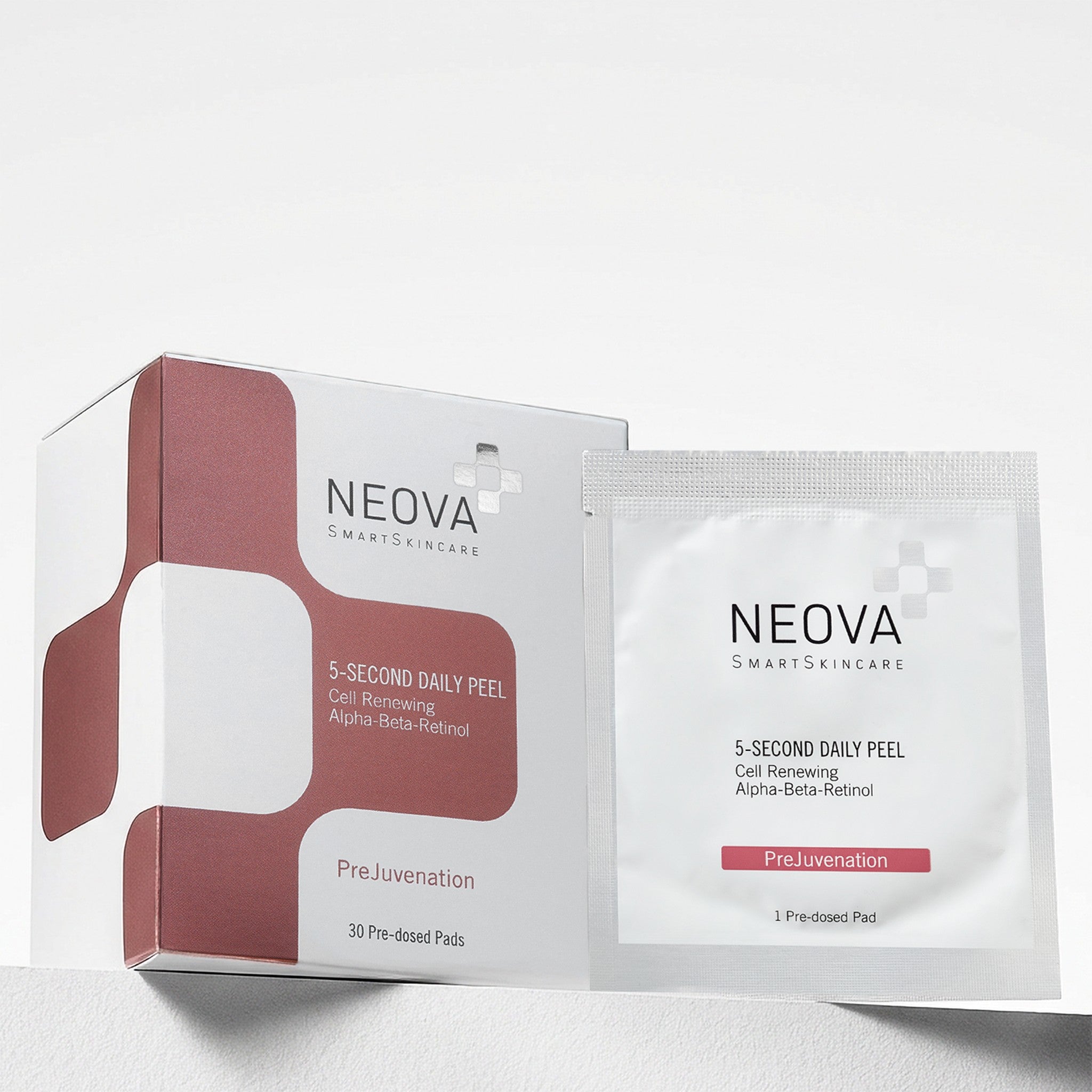
- Pack the individually packaged 5-Second Daily Peel for easy, gentle exfoliation on the go, useful for maintaining radiance and supporting product absorption when your routine is otherwise condensed.

Train and Hotel Skincare
Hotel rooms often run dry from heating or air conditioning. Trains offer little room and even less privacy for a full routine.
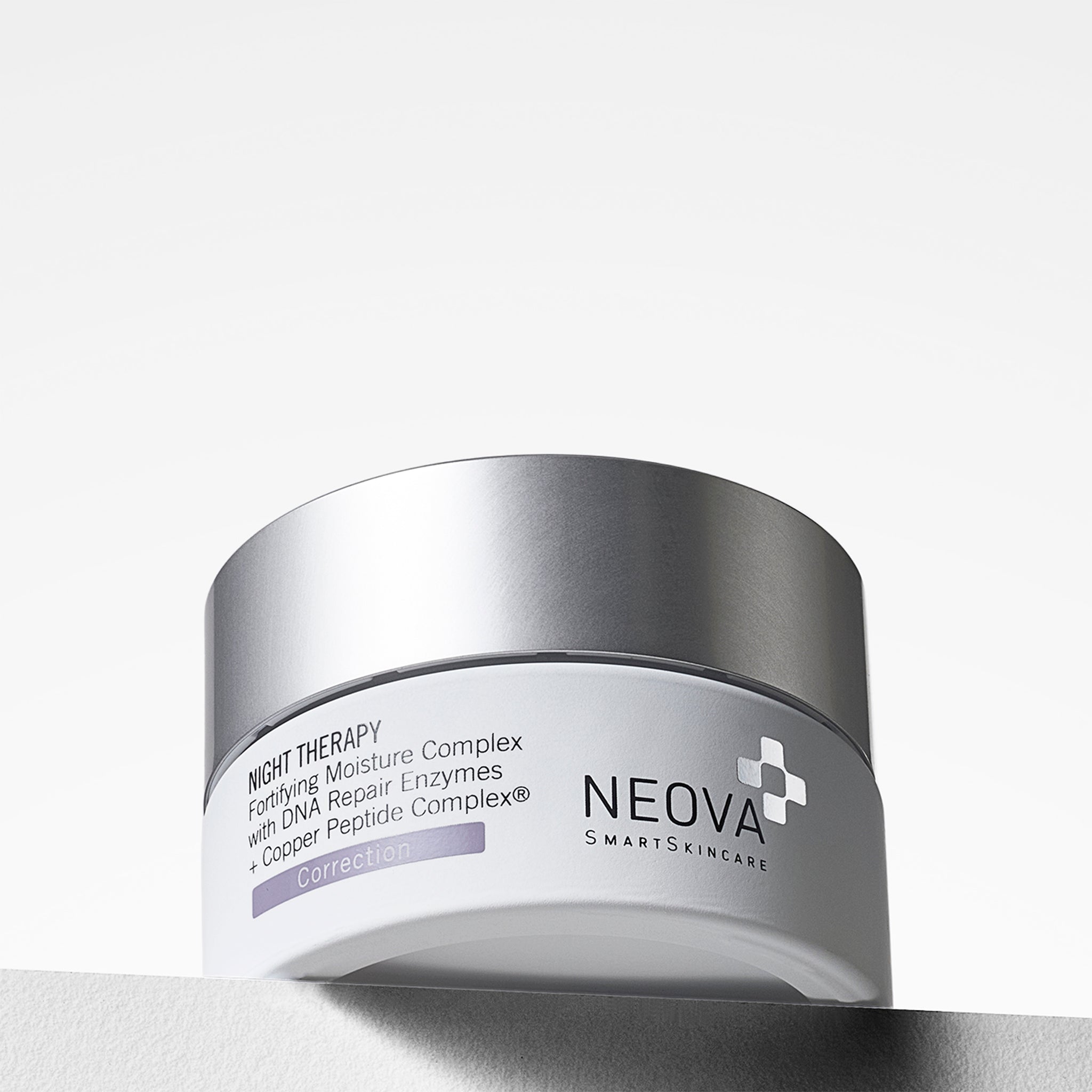
- For dry hotel air, layer an overnight cream moisturizer, such as Night Therapy, at night to lock in moisture while you sleep.
- If you have the packing space, a travel-size humidifier pairs well with this routine on extended hotel stays.
Managing Time Zone Changes
Jet lag affects more than sleep. Your skin's repair and renewal processes run on the same internal clock that's been disrupted, and that clock already governs a slower turnover cycle than it did years ago, so the disruption tends to show more visibly.
- Stick to your morning and evening routine, even when your schedule feels scrambled.
- Spend time outdoors in daylight at your destination. Light exposure helps reset your internal clock.
- Use DNA Total Repair to support cellular renewal while your skin recalibrates.
- Give it a few days. Your complexion will catch up.

Travel + Vacation Skincare Tips
The right products are only half the equation. How you pack, store, and use them determines whether your skin thrives on vacation or struggles to recover from it.
Space-Saving Strategies
- Choose multi-taskers. A tinted moisturizer with SPF, like NEOVA's Silc Sheer 2.0 SPF 40, covers hydration, protection, and light coverage in one step.
- Decant only what you'll use. A short trip doesn't call for full-size bottles.
- Label everything. A quick note with product name and date keeps your kit organized and your formulas fresh.
Choosing the Right Containers
- Go leak-proof. Squeeze tubes and pump bottles hold up well to luggage handling and cabin pressure changes.
- Protect delicate items. Hard-sided cases keep masks and patches from getting crushed.
- Mind the light. Antioxidant serums, perform best in opaque containers that block light exposure.
Building in a Backup Plan
- Split your essentials. Pack a mini cleanser, moisturizer, and SPF in your carry-on, separate from checked luggage.
- Know your ingredients. Keep a list of what's in your routine, so you can find a comparable substitute if needed.
- Treat minor issues simply. Sunburn, breakouts, and dryness can often be calmed with what's already in your bag. Cu3 Recovery Spray is gentle enough for irritated or sun-stressed skin, even far from home.

Keep It Consistent
The biggest vacation skincare win isn't a product. It's consistency. Stick to your core routine, even as your schedule, climate, or time zone changes around you.
Don't Forget Your Hair
Travel stresses more than skin. Hair density and scalp health both become more important to maintain as hair naturally thins with age, and dry cabin air, hard water, and sun exposure all add to that strain while you're away.
The Tricomin Travel System Kit includes a densifying shampoo, fortifying conditioner, and AHK-Cu treatment spray, all in TSA-compliant sizes, powered by the same copper peptide technology behind NEOVA's skincare. It's a simple way to protect scalp health and hair density without adding a separate routine to remember.

Post-Vacation Skin Recovery
Coming home often reveals what your trip really did to your skin. A little focused care in the first week back helps it recover faster, and helps protect the progress you've already made.
Check In With Your Skin
Different trips leave different traces:
-
Tropical and beach trips often mean extra oil, clogged pores, or sun exposure.
-
Cold or mountain travel tends to leave skin dry, wind-chapped, or flaky.
-
Long flights can leave skin dull, dehydrated, and more sensitive than usual.
Your First Week Back Routine
This isn't the week for harsh scrubs or strong actives. Travel-stressed skin needs support, not more stress.
- Cleanse thoroughly but gently. Radiant Wash clears sunscreen buildup, pollution, and travel residue without stripping the skin.
- Replenish lost moisture. Advanced HA restores hydration whether you came from dry mountain air or a humid coastline.
- Repair and renew. DNA Total Repair supports your skin's natural recovery process after sun and environmental stress, addressing damage at the source rather than masking it.
- Ease back in. Wait a few days before reintroducing retinol or strong acids. Travel-stressed skin is more reactive, so give it time before resuming your full routine.

Hang On to the Glow
Some vacation effects, a little color, better circulation, a more relaxed look, are worth keeping. The way to hold onto them is to keep up the habits that created them.
- Stick with a daily SPF to protect your results and prevent new damage.
- Keep up the water intake that served you well on the trip.
- Add an antioxidant serum, like C 20+, or retinol treatment to support radiance and even tone after your skin settles back in.

FAQs About Vacation Skincare
Can I use the same skincare products at high altitude as I do at sea level?
Not always. Thinner air at altitude means less natural UV filtration, so the same SPF that works at home may need more frequent reapplication. Skin also loses moisture faster at altitude, so many people find they need a richer moisturizer than they'd use day to day, even outside a cold climate.
Does makeup make travel skin issues worse?
It can, especially on long flights or in humid climates. Heavy or long-wear makeup can trap heat, sweat, and bacteria against the skin, slowing recovery from dryness or irritation. On travel days, a lighter approach, like a tinted moisturizer with SPF, is often easier on already-stressed skin.

How does chlorine from pools affect skin differently than saltwater?
Chlorine strips natural oils and can disrupt the skin's pH, often leaving it feeling tight or itchy. Saltwater has a similar drying effect but can also be mildly exfoliating. Either way, rinse promptly and follow with a barrier-repair moisturizer to offset the dryness.
Should I adjust my skincare routine for a cruise?
Yes. Cruises combine several climate stressors at once: sun exposure on deck, salty sea air, and dry, recycled air inside cabins. A flexible routine, hydrating serum, broad-spectrum SPF, and a richer night cream, covers most of what a cruise will ask of your skin.
Is it normal for skin to break out more during travel, even with the same routine?
Yes, this is common. Travel changes water quality, climate, pillowcases, sleep, and stress levels, all of which can affect breakouts independent of your products. If breakouts appear, it's often the environment shifting, not necessarily your skin routine.
For ongoing concerns with excess oil or blemishes, explore NEOVA's Acne + Oil Control Collection for long-term skin-balancing solutions.

Travel Smarter with NEOVA SmartSkincare
Good skin and good travel aren't in competition. With the right products and a little planning, your vacation skincare regimen can keep pace with you, whether you're gone for a weekend or a month.
The formula is simple: know what your destination will ask of your skin, pack accordingly, and give it a little extra care when you land back home.
NEOVA's clinically-developed formulas, built around clinically-advanced DNA repair enzymes and copper peptides, are designed to support your skin through the full arc of travel: before you leave, while you're away, and after you're back.
You've spent years building a skincare routine that works. NEOVA skincare is built to help it travel with you.
Sources
[1] Mase SR, Gearhart SL, Nardell EA, Brown CM. Air travel. In: CDC Yellow Book 2026: Health Information for International Travel. Centers for Disease Control and Prevention; April 23, 2025. Accessed June 24, 2026. https://www.cdc.gov/yellow-book/hcp/travel-air-sea/air-travel.html.